Land Clearing vs. Grading: What's the Difference and When You Need Both
Quick Answer: Land clearing removes what is sitting on top of the ground — trees, brush, stumps, roots, old fence lines, and debris — so the site is open and workable. Grading is a separate step that reshapes the ground itself, cutting high spots and filling low ones to create the slope a pad, driveway, or building needs to shed water. A cleared lot is not automatically ready to build on, and a graded lot still full of brush and stumps will not hold a stable grade for long. Most raw-land and new-construction projects need both, done in that order: clearing first to expose real ground, then grading to shape it. Skipping or reversing the sequence is one of the most common reasons a new grade fails within the first year.
You bought ten acres outside Canyon with a good building spot in mind. From the road, it looks ready: open pasture, a scatter of mesquite along the fence line, maybe an old windmill pad from fifty years back. Then the surveyor stakes the corners and you see it — the “open” pasture has a brush thicket sitting right where the pad needs to go, a collapsed shed nobody mentioned, and a slope running the wrong way toward the low corner. What looked like one job, get the site ready, turns out to be two different jobs. Confusing them is how a lot of Panhandle builds lose weeks before the first yard of dirt ever moves.
Land clearing and grading get lumped together constantly. Partly that's because the same contractor often handles both, and partly because from a distance a cleared, graded site just looks like “dirt work.” But they're not the same operation. They solve different problems. Knowing which one your property actually needs — or whether it needs both, and in what order — saves real time once equipment shows up. Here's what each one actually does, when a site needs just one, and why so many builds end up needing both, in sequence.
What Land Clearing Actually Involves
Removing Standing Vegetation
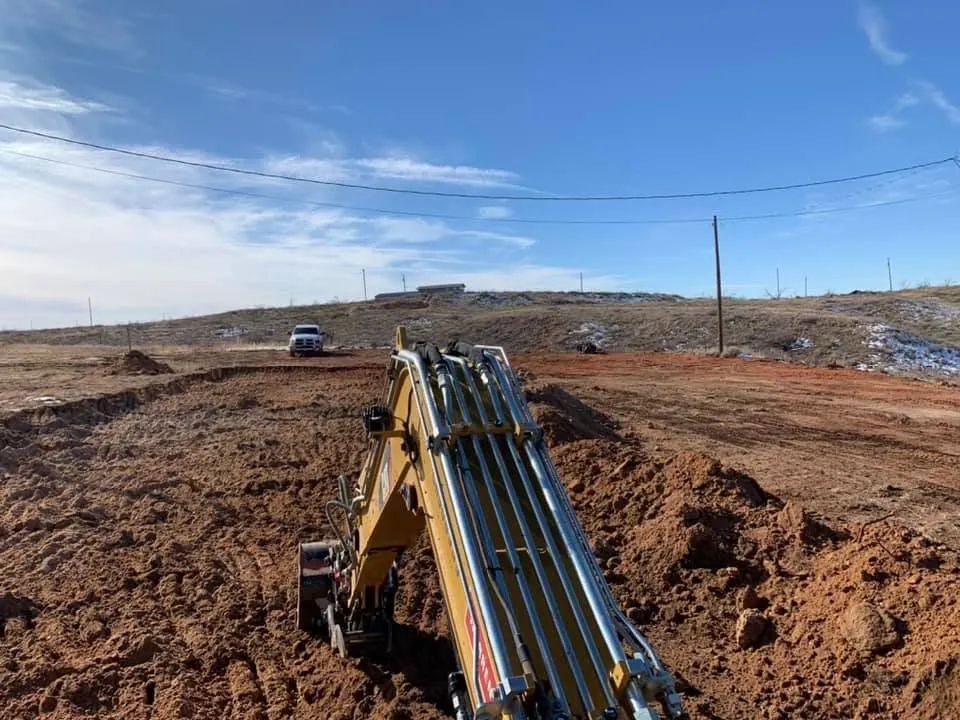
Land clearing starts above ground: trees, brush, mesquite, cactus, and heavy grass cover sitting between you and a workable site. Some of it comes out with a dozer blade or a skid steer running a brush cutter attachment. Bigger trees usually get felled and hauled off separately. At this stage the goal is simple — expose the ground so the next steps can happen.
Pulling Stumps And Roots, Not Just Trees
Cut a tree off at the base and you still have a stump and a root ball sitting in the ground, and that root system doesn't stay put or stay solid. Grubbing — digging out stumps and the major root mass — is its own part of land clearing, separate from felling. The Natural Resources Conservation Service's Land Clearing standard defines the practice as removal of trees, stumps, brush, and other vegetation, treating root and stump removal as part of the same job as cutting the vegetation down. Not an optional add-on.
Clearing Debris, Old Structures, And Buried Obstacles
Rural acreage carries decades of leftovers most of the time — collapsed outbuildings, old fence posts, buried trash piles, a rock pile some previous owner pushed up and forgot about. A thorough clearing pass finds these and removes them along with the vegetation. Leave any of it behind and it becomes a problem the moment equipment starts grading or a foundation crew starts digging.
Managing what gets pulled matters more than most people expect. NRCS guidance on land clearing calls for scheduling major clearing work during seasons with lower runoff risk, and for staging debris piles well clear of buildings, roads, and any remaining woodland — generally at least 100 feet off — so a pile doesn't become a fire hazard or get shoved into a drainage path by the next hard rain. Woody debris typically gets piled, chipped, or burned under a permit. Not left scattered across the site to deal with later.
What Grading Actually Involves
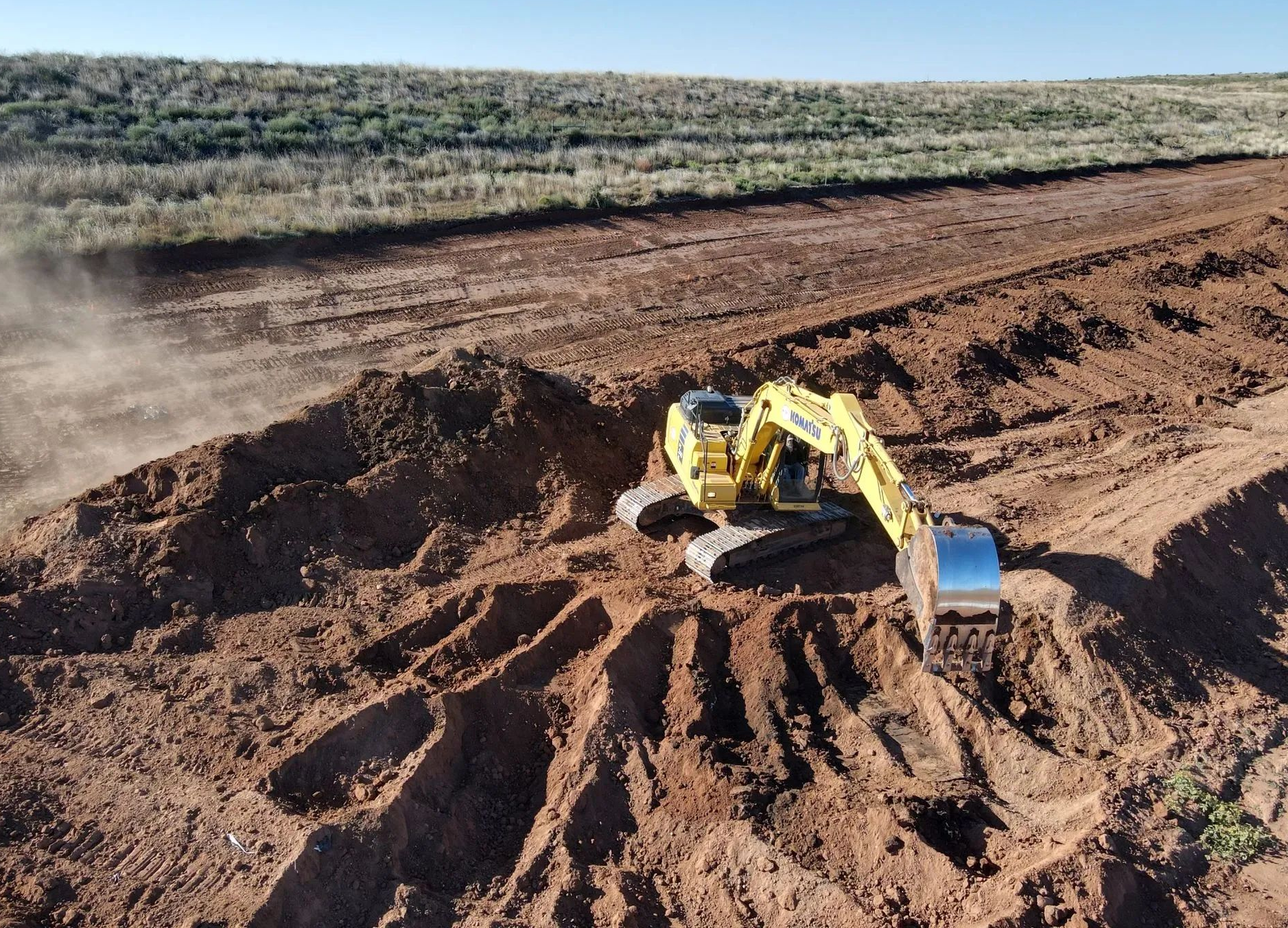
Grading is a two-stage shaping process. Rough grading moves large volumes of dirt to set the general shape of the site — cutting a high knoll, filling a low swale, roughing in the building pad elevation. Finish grading comes later, once the structure is up, dialing in the final slope around foundations, driveways, and landscaped areas to a precise, engineered fall.
The entire point of grading is controlling where water goes once it rains. The International Residential Code's grading and drainage section sets a benchmark that's used everywhere: the ground should fall at least 6 inches within the first 10 feet away from a foundation, and any hard surface like a driveway or patio within 10 feet of the building should slope at least 2 percent away from it. Where a property line, retaining wall, or existing slope makes that fall impossible, the same guidance allows drains or swales to carry the water out instead. Those numbers aren't decoration. They're what keeps a storm moving off the site instead of pooling against a structure.
Reshaping dirt is only half the job, though. Fill placed and left loose keeps settling for months, quietly flattening or reversing the slope that was built in. Grading done right places fill in thin, compacted layers so the finished surface holds the shape it was cut or filled to, instead of drifting out of tolerance the first time it gets wet.
And there's the erosion side, which people forget about until it bites them. Bare, freshly graded dirt is loose and vulnerable until it's compacted, seeded, or covered. On any site disturbing an acre or more, EPA's construction stormwater permit program requires a written plan for erosion and sediment control — silt fence, seeding, stabilized entrances — precisely because newly graded ground sheds soil fast in the first heavy rain after the work. Even on smaller Panhandle lots, wind alone can strip a freshly graded surface before it ever has a chance to set. Timing and temporary cover matter almost as much as the shaping itself.
When a Site Only Needs Land Clearing
Not every job needs both. A pasture being opened up for fencing, a brush-choked fence line that needs to be walkable again, a stock pond site where the goal is just getting the mesquite and cedar out before excavation starts later — these are clearing jobs on their own, no grading attached. If the ground underneath is already reasonably level and drains the way it should, clearing the vegetation and hauling off debris might be the whole scope. The test is simple: if the finished elevation and slope already work for what you're using it for, you probably don't need a grading pass. Not yet, anyway.
When a Site Only Needs Gradin
The opposite comes up just as often. A lot that was cleared years back, has stayed mowed or grazed, and never grew over is usually grading-only work — the vegetation problem got solved a long time ago, but the dirt itself was never shaped right. Standing water in a corner of an already-open yard. A driveway that washes out every storm. A pad that settled unevenly under an existing structure. All of these are grading problems on ground that doesn't need clearing at all. Sending a crew to clear a site that has nothing left to clear just wastes a mobilization. The fix there is reading the grade, not the brush.
Tip: Before assuming your site needs one or the other, walk it after the next rain and watch where the water actually goes. A site with standing brush but water that already drains fine is a clearing job. A site that is open and mowed but holds water in a low spot is a grading job. Seeing both problems together — brush and standing water — is usually the sign a project needs the full sequence.
Why Most New Builds Need Both, In That Order
New construction, barndominium pads, any site coming from raw acreage to a build-ready lot — these almost always need clearing first and grading second. The order isn't arbitrary. Grading equipment can't establish an accurate, lasting slope over ground that still has root balls, buried stumps, or brush mats hiding under the topsoil. A dozer can push dirt over a stump and make a pad look flat on the surface. But the void left when that root eventually rots becomes a soft spot underneath — exactly the kind of hidden settlement point that shows up as a dip or a crack months after the concrete goes in.
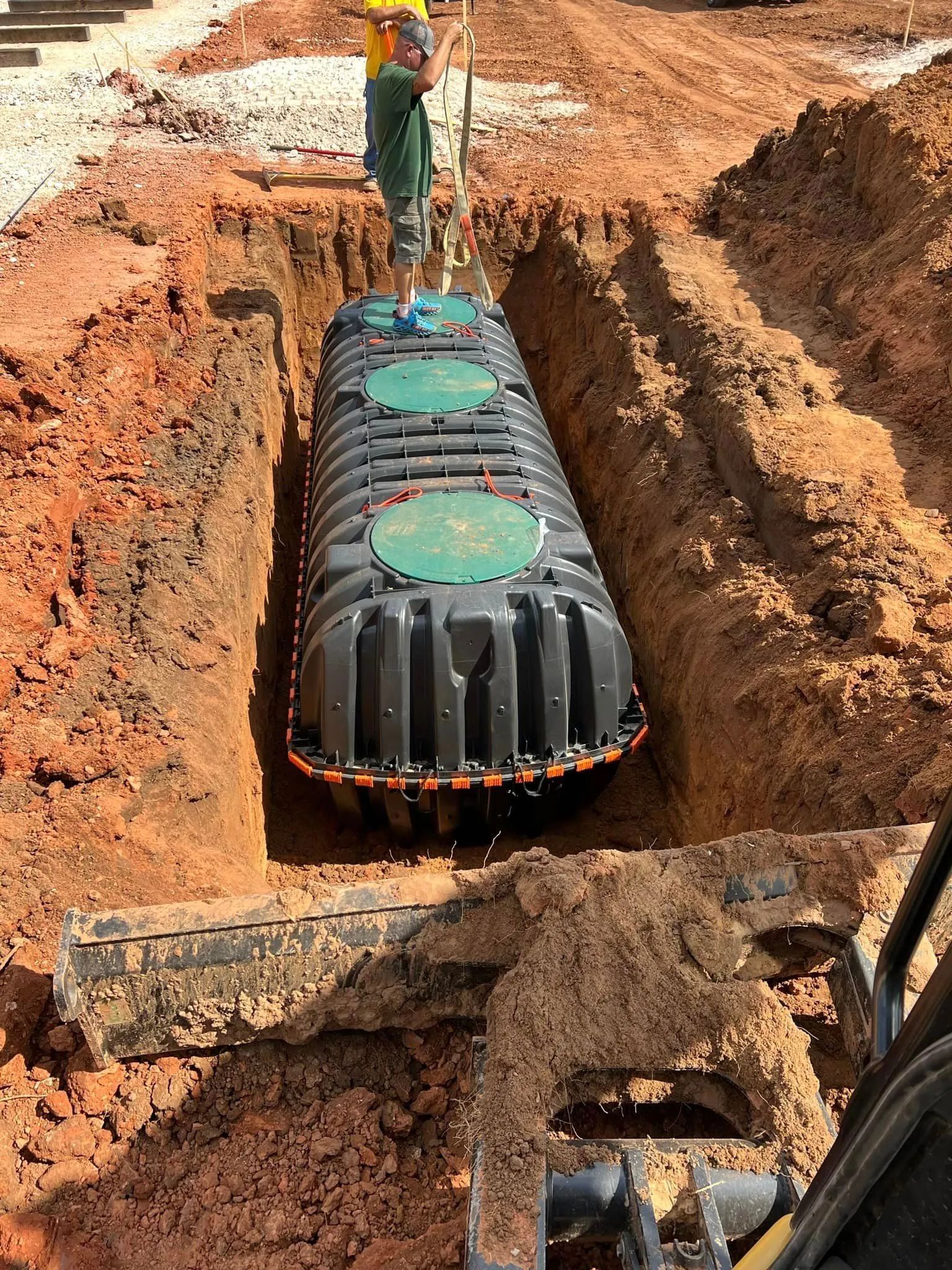
The practical sequence on a typical Panhandle build runs like this. Clear the vegetation and haul or pile the debris. Grub out stumps and major roots to a depth that won't interfere with the planned cut. Strip and stockpile any usable topsoil. Then bring in the grading equipment to cut, fill, and compact the pad to the elevation and slope the plans call for. Utilities, septic lines, and foundation excavation typically follow the rough grade, with finish grading coming last once the structure is framed and the final landscaping slope gets set.
Skipping straight to grading on ground that hasn't been properly cleared and grubbed is one of the more expensive mistakes a property owner can make. The problem doesn't show up on day one — it shows up as a settling pad or a cracked driveway a season or two later, once the buried organic material has had time to decompose and the ground above it has had time to drop.
Warning: Do not let a contractor grade over standing brush, downed trees, or unremoved stumps to save a mobilization trip. Burying organic material under fill does not make it go away — it decomposes, loses volume, and leaves a void that the ground above eventually settles into. On expansive Panhandle clay, that uneven settlement is magnified by the soil's own swelling and shrinking, which is exactly the combination that cracks slabs and driveways. Insist on a proper clearing and grubbing pass before any grading begins on ground that has not been built on before.
Frequently Asked Questions
Do I need land clearing if my lot already looks open and grassy?
Not necessarily. Check beneath the grass for old stumps, buried debris, roots, or structures. If the ground is clean and usable, grading may be enough.
Can grading start before land clearing is completely finished?
Rough grading should wait until the building area is cleared and grubbed. Stumps, roots, and buried organic material can interfere with accurate grading and cause settlement later.
How does leftover vegetation under a graded pad cause problems later?
Buried stumps, roots, and organic debris eventually decompose and shrink, creating voids beneath the fill. This causes uneven settlement, which can damage slabs, driveways, and building pads.
What's the correct order for a new build: clear first or grade first?
Clear and grub the site first, then strip topsoil, rough grade, and compact the ground. Finish grading follows construction. This sequence helps create a stable, lasting building site.
Does land clearing automatically include stump and root removal, or is that separate?
Proper clearing should address stumps and major roots through grubbing. Removing only visible trees leaves organic material underground, which can decompose and create settlement beneath future graded areas.
How do you keep erosion under control on land that's been cleared but not yet graded?
Limit exposed soil, protect drainage paths, use temporary stabilization where needed, and keep debris away from low areas. Silt fencing and temporary seeding can also reduce erosion.
Getting the Right Work Done in the Right Order
Understanding the difference between clearing and grading makes planning a Panhandle property project much simpler. Clearing removes the vegetation, stumps, roots, and debris that interfere with site preparation, while grading shapes and stabilizes the exposed ground for drainage and construction. Whether a property needs one service or both depends on its existing conditions, intended use, and natural drainage. The key is addressing each problem properly rather than treating all dirt work as the same task.
For property owners in Amarillo, Canyon, and Borger, TX, site conditions can change significantly from one parcel to another, making a careful assessment especially valuable. Coles Custom Dirt Work
brings 10
years of experience to projects throughout the area, helping ensure clearing, grubbing, grading, and compaction are approached as connected but distinct steps. A properly prepared site starts with understanding what the ground actually needs before the equipment begins moving.