Common Excavation Mistakes That Can Delay Your Project
Quick Answer: Most excavation delays trace back to a handful of repeat mistakes: skipping the required utility locate call, moving equipment before anyone reads the soil, treating trench safety rules as optional, leaving property lines or permits unresolved, and having no real plan for the dirt that comes out of the ground. Texas law requires two full business days between an 811 call and the first cut. OSHA requires a protective system in any trench five feet deep or more. And nationally, failure to call before digging remains the single biggest cause of utility damage, year after year. Catching these before equipment mobilizes is what keeps a schedule intact instead of stalled.
Equipment shows up Monday morning, ready to move dirt. By Tuesday afternoon it's parked, and you're standing next to a crew with nothing to do, because a locate ticket never got called in, or because the bucket hit caliche eighteen inches down that nobody tested for first. Either way, the two-week window you built the rest of the project around is already off by a week, and the concrete crew booked for next Monday isn't going anywhere.
That's how most excavation delays actually happen. Not bad weather. Not a broken machine. A step somebody skipped before the first cut ever went into the ground. From a barndominium pad outside Canyon to a commercial lot in Amarillo, the projects that stay on schedule are the ones where the unglamorous parts, the locate ticket, the soil read, the property lines, the plan for where the dirt goes, got handled before equipment ever showed up. Here's where those plans usually break down, and what it costs when they do.
Calling 811 Too Late, or Not at All
Texas law requires two full business days' notice to 811 before digging starts, on any property, weekends and holidays don't count toward that window. Skipping it, or calling the day before equipment arrives, is one of the most common ways an excavation stalls before it's even begun.
It's also the most consequential mistake nationally. The Common Ground Alliance's damage-tracking program logged well over 220,000 reported incidents of utility damage in a single recent year, and its own data points to the same root cause every year running: failure to notify before digging. Telecom and cable lines took the biggest share of that damage, with natural gas lines close behind.
A locate ticket doesn't cover everything, either. Public utility lines get marked through the 811 process, but private lines, a septic line, an irrigation main, a well line running out to a barn, usually don't show up in that system at all. On rural Panhandle acreage, those need to get flagged separately, from an old site plan or from whoever's owned the property long enough to remember where they run, before the ticket even gets called in.
Moving Equipment Before Anyone Reads the Soil
Panhandle ground looks the same from the road almost everywhere: hard, dry, maybe a little caliche showing where a road cut exposed it. What's actually sitting under a specific pad site is a different question entirely, and it changes lot to lot even within the same subdivision.
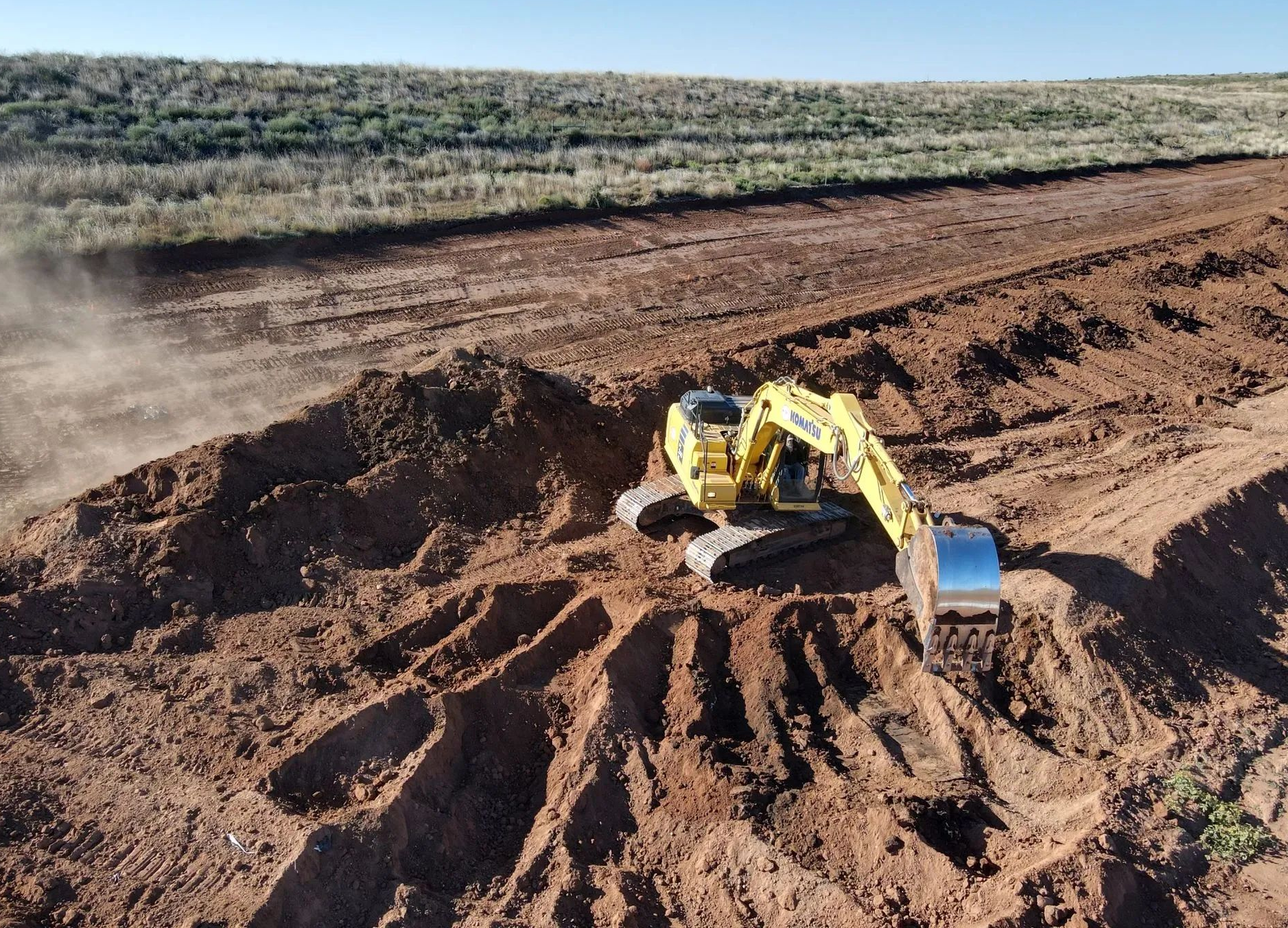
Some sites dig clean the full depth. Others hit a caliche shelf eighteen inches down that a standard bucket barely dents, or expansive clay that swells and shrinks enough to move a slab months after the concrete's cured. Skipping a soil read before building the schedule is how a project planned for a few days stretches into a week and a half. Equipment sized for ordinary dirt doesn't move through caliche the same way a standard cut does, and a crew that discovers that mid-job has to stop, source a different attachment or a bigger machine, and restart, all while the framing crew's start date hasn't moved an inch.
Treating Trench Safety Like a Formality
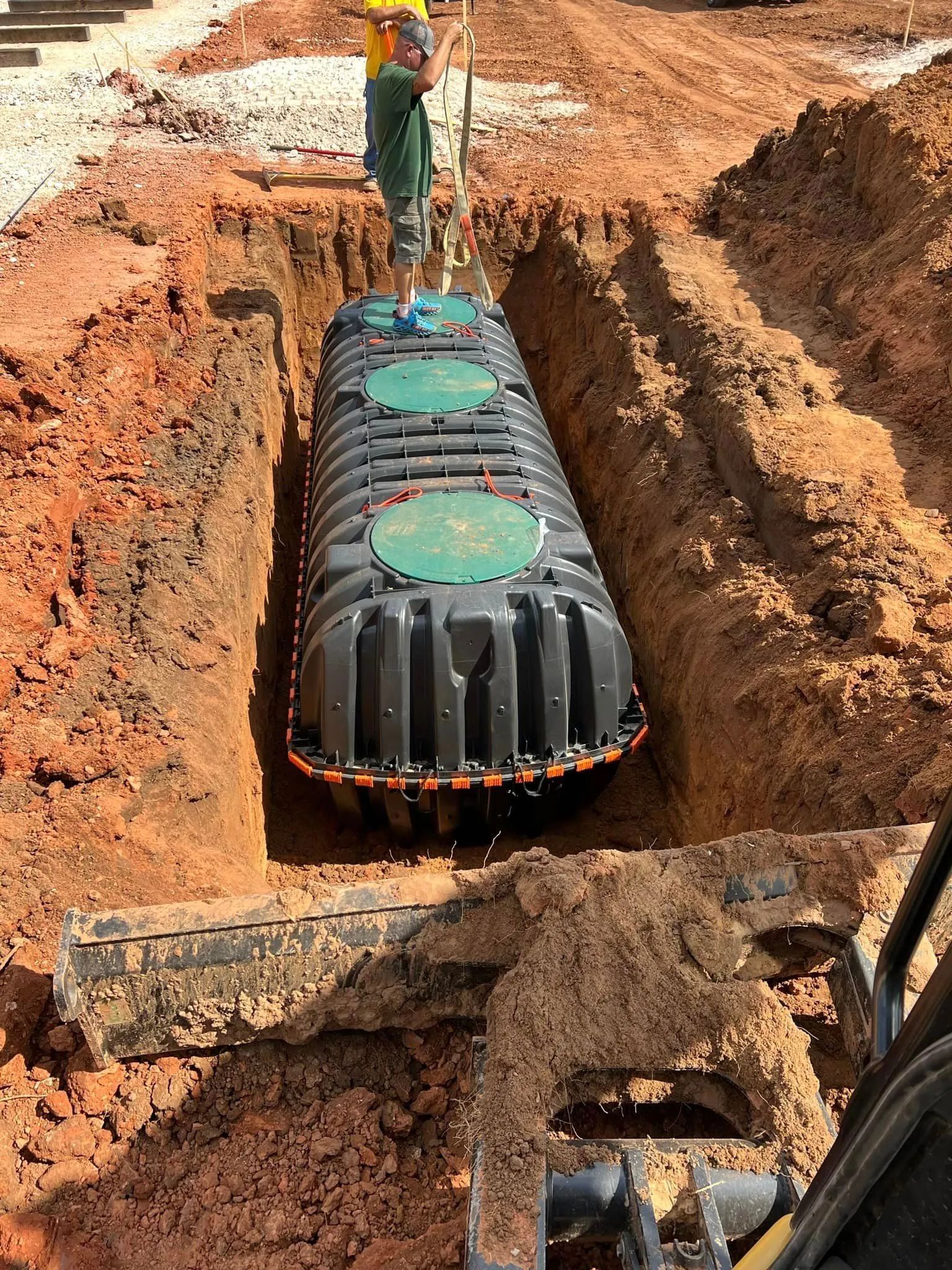
OSHA's excavation standard doesn't leave much room for judgment calls. Any trench five feet deep or more needs a protective system, sloping cut back at roughly a 1.5-to-1 ratio for ordinary soil, a shield, or engineered shoring, unless a competent person can confirm the cut sits entirely in stable rock. Depth alone isn't the only trigger, either: any trench four feet deep or more needs a ladder, ramp, or other safe way out within 25 feet of lateral travel, so nobody's climbing loose spoil to get out.
None of that is paperwork for its own sake. A competent person has to inspect the cut before work starts each day, again after any rainstorm, and has the authority to pull the crew out the moment the ground looks like it's shifting. Skip that step, or let it slide because the trench "looks fine," and a Panhandle downpour that softens a cut overnight turns into exactly the hazard that standard exists to catch, and exactly the kind of stop-work order that resets a schedule by days, not hours.
Warning: Do not let a crew work a trench deeper than five feet without a protective system in place, even for "just an hour" or "just to finish this run." A cave-in can happen without warning. The citation, the injury, or worse that follows doesn't just cost days. It can shut a project down entirely while it gets investigated.
Leaving Property Lines and Permits Unsettled
A crew that's paying attention asks for a current survey and marked corners before the first cut goes in, and won't move a boundary stake just to make the job easier. Any dispute over a property line, an easement, or a shared drainage path needs to get resolved before equipment shows up, not after a corner's already been dug into.
Permits work the same way. A required inspection tied to a permit, a septic permit, a driveway permit, a commercial site permit, sits on its own timeline, and that timeline doesn't bend because equipment is already on-site and idle. Pulling permits after mobilization instead of before it is a fast way to turn a scheduled two-week job into three.
No Real Plan for the Dirt That Comes Out
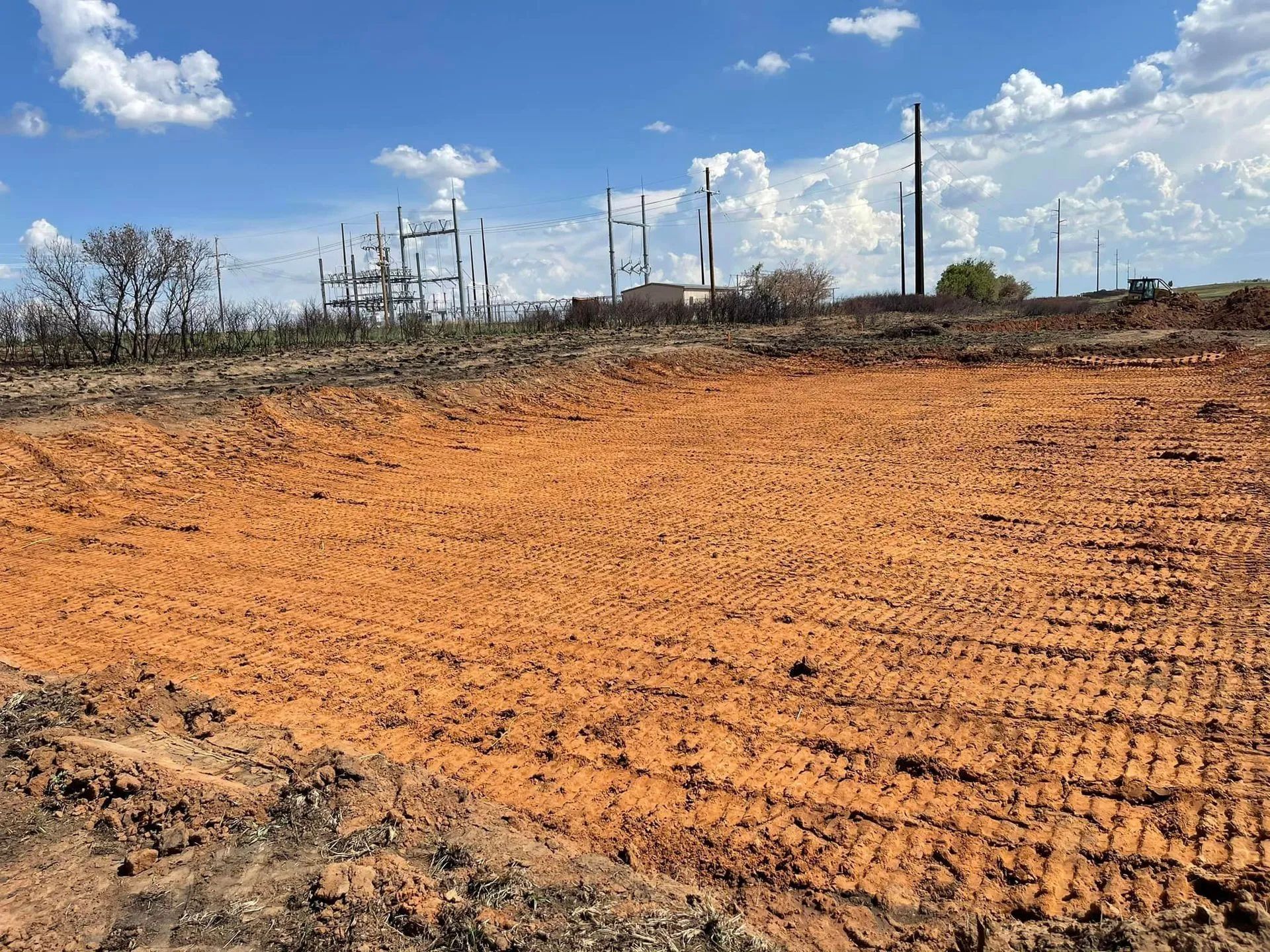
Every yard of dirt that comes out of a hole has to go somewhere, and treating that as an afterthought backs up a job just as fast as anything else on this list. Topsoil worth keeping needs to get stripped and stockpiled before the rest of the cut starts, not mixed into the general spoil pile and hauled off by accident. Material that isn't suitable for backfill, too much clay, too much rock, anything that turns out to be contaminated, has to go to a permitted disposal site, and figuring that out mid-job instead of before it starts is how a crew ends up standing around waiting on a truck.
Where the spoil sits matters too. OSHA requires spoil piles and equipment kept back at least two feet from the edge of any open excavation, both so the weight doesn't collapse the cut and so nobody's climbing over a pile to get in and out. Pile it too close, too high, or in the path the haul trucks need, and that creates exactly the kind of access problem that slows a crew down all day, every day, until somebody finally moves it.
Tip: Walk the site before equipment mobilizes and mark, on paper or with stakes, where spoil, stockpiled topsoil, and haul-off material are each going to sit. Working that out on day one, with a machine already idling and a schedule already running, almost always ends with material in the wrong spot and a truck route that has to get rebuilt.
Ignoring the Weather Window
Panhandle weather doesn't split neatly into wet and dry seasons. It stays dry for weeks, then a single storm drops two inches in an afternoon. An excavation plan that doesn't account for that swing gets caught twice: bare, freshly cut ground erodes fast in the first hard rain, and OSHA requires a fresh inspection of any open trench after a rainstorm before anyone goes back into it, whether or not the schedule has room for that pause.
High wind adds its own version of the same problem, stripping a freshly graded surface before it's had any chance to set. Weather is the excuse everyone reaches for first when a project runs long. It's rarely the actual cause. The real fix is building enough slack into the schedule to check ground conditions the morning after weather rolls through, instead of assuming the site sits exactly how it was left the day before.
Frequently Asked Questions
Do I still need to call 811 if I'm digging on my own rural property in the Panhandle?
Yes. Texas law requires notifying 811 two full business days before digging, even on private acreage. Public utilities get marked through that process, but private lines like septic or well lines need separate flagging first.
How deep does a trench have to be before it needs shoring or sloping?
Five feet is the line under OSHA's excavation standard. Any trench that deep needs sloping, a shield, or shoring, unless a competent person confirms stable rock. Four-foot-deep trenches also need a safe way out too.
What happens if a crew hits caliche or rock that wasn't expected?
Work usually slows while the crew figures out if the equipment on-site can handle it, or if a different machine needs to come in. That's what a soil read before mobilization is meant to catch.
Who's responsible for confirming property lines before excavation starts?
The property owner ultimately resolves any dispute over a boundary, easement, or shared drainage path before work begins. A careful crew asks for a survey and marked corners, but won't dig around an unresolved dispute.
Can bad weather really shut down an excavation project mid-job?
It can, and it happens more often in the Panhandle than the dryness suggests. A hard rain after a trench opens triggers a required re-inspection, and wind can undo days of grading on bare dirt.
What's the difference between what a competent person checks and what a geotechnical assessment decides?
A competent person is on-site daily, watching for cracking, seepage, or shifted soil, and pulling the crew out if needed. A geotechnical read happens earlier, determining what the soil is and how deep bedrock sits.
Getting the Sequence Right From Day One
Every mistake on this list traces back to the same root cause: skipping a step because the schedule felt too tight to slow down for it. The fix isn't more equipment or a faster crew. It's sequence, the locate ticket first, the soil read before mobilization, property lines and permits settled early, and a real plan for the dirt itself. Projects that stay on track aren't the ones that avoid problems. They're the ones that catch them before a machine turns over.
Coles Custom Dirt Work
has spent 10
years reading Panhandle ground before the first cut goes in, from pad sites outside Canyon to commercial lots in Amarillo and Borger. That local experience is what turns a plan on paper into a schedule that holds once equipment actually mobilizes. The mistakes above aren't rare exceptions; they're the default outcome whenever preparation gets treated as optional. Handled in the right order, they simply don't happen, and the job moves the way it was always meant to.